US-Iran War: What Washington Isn't Telling You
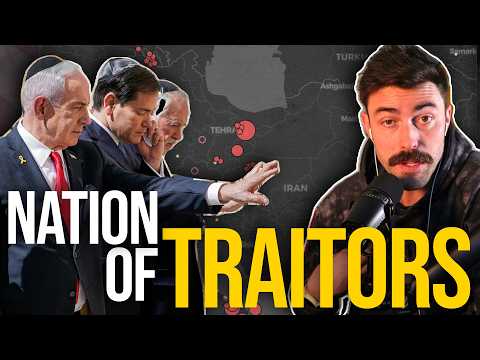
The US-Iran war is going worse than Washington is letting on, according to Ian Carroll's latest video, 'War in Iran is not going as well as they're telling you.' Carroll, drawing on open-source satellite imagery and independent analysts, argues that Iran has successfully destroyed multi-billion-dollar US and Israeli radar systems, closed the Strait of Hormuz without firing a shot, and turned an early airstrike on a girls' school into a recruitment poster. He's openly anti-Israel and says so upfront — which is either a red flag or a refreshing change, depending on who you ask.
What the Official Briefings Are Leaving Out
Pete Hegseth went on camera projecting total American dominance. In War in Iran is not going as well as they're telling you..., Ian Carroll ran that against open-source reporting and found the gap uncomfortable.
Satellite imagery, he says, confirms Iranian strikes on THAAD batteries and FPS-132 radar installations — systems that cost billions and took years to position. Iran also, apparently, trolled US forces into bombing decoy aircraft painted to look like the real thing.
Iran's Actual Strategy
Carroll's read is that Iran isn't trying to win a conventional war — it's trying to make the war expensive enough that the US loses interest.
Cheap drones against billion-dollar radar arrays is the math. The Strait of Hormuz closure is the same logic: Iran didn't need to sink anything. The threat alone was enough — shipping insurance costs spiked, tanker traffic stopped, and global energy prices climbed. No missiles required.
Why Is the US Even in This?
A Democratic congressman asked, on the record, where exactly the imminent threat to American soil was. Carroll doesn't think there was one.
He points to statements from Marco Rubio and Trump that, read carefully, describe the US acting to protect Israel rather than responding to a direct attack. Carroll has a strong anti-Israel bias — he says so himself — and frames it as a corrective to what he sees as decades of pro-Israel framing baked into American media, citing the Iraq War intelligence failures as exhibit A.
The Girls' School Strike
Early in the conflict, US or Israeli strikes hit a girls' school, killing children. Carroll argues this did more strategic damage to the coalition than to Iran.
Iranian public opinion, which had been complicated and fractured before the war, reportedly unified fast after that. Bombing civilian targets to degrade military resolve has a mixed track record, historically speaking — Carroll's point is that in this case, it backfired immediately and visibly.
Our Analysis: Carroll gets the asymmetric warfare angle right — Iran doesn't need to win battles, just make the war expensive enough that the US public loses patience. Bombing a girls' school is a perfect example of how you lose a war you're winning militarily.
This connects to a broader pattern: the US keeps intervening in conflicts where the exit strategy is vague and the ally's interests diverge from America's own.
Watch the Strait of Hormuz. If Iran tightens that chokehold, oil shock politics will do more damage to Western resolve than any missile exchange.
There's also a media literacy question buried in all of this that Carroll raises implicitly even when he's being explicit about his own bias. When a commentator flags their own perspective upfront, it's almost disarming — you're so busy evaluating whether to trust him that you might not notice how much of what he's presenting is verifiable through public sources. The satellite imagery isn't his. The insurance rate data isn't his. The congressman's question is on the record. Bias in framing and bias in facts are different problems, and conflating them is how a lot of inconvenient reporting gets dismissed.
The deeper issue Carroll is circling is one the mainstream press tends to handle awkwardly: what does the US actually want out of this, and is that goal achievable? The Iraq War parallel he invokes isn't just about intelligence failures — it's about the gap between stated objectives and real ones. If the real objective is preventing Iranian nuclear capability on Israel's behalf, that's a legitimate policy position, but it's a different war than the one being sold to the American public. Different wars require different exit ramps, and right now there's no visible ramp at all.
Independent analysts doing this kind of open-source work fill a genuine gap. Official briefings are optimized for domestic consumption. Satellite imagery and shipping data aren't. Whether Carroll's conclusions hold up over time is a separate question — but the methodology of checking official claims against public data is exactly what more war coverage should be doing.
Source: Based on a video by Ian Carroll — Watch original video
This article was generated by NoTime2Watch's AI pipeline. All content includes substantial original analysis.
Related Articles

Afroman Trial: Free Speech Wins vs Police Defamation
A jury ruled in favor of rapper Afroman in a defamation lawsuit brought by the police officers who raided his home in 2022, finding that his satirical songs about the raid were protected under the U.S. First Amendment. Officers had sued after Afroman turned surveillance footage of their conduct — including one officer's apparent fascination with a lemon pound cake — into viral music mocking them by name. Josh Johnson's video 'The Afroman Trial Explained: Cops vs Hip Hop' breaks down how the case went from an unwarranted drug raid to a courtroom win that doubled as a free speech lesson.

Josh Johnson on Cassette Tapes: The Physics Problem
Comedian Josh Johnson stumbled onto a physics problem he didn't expect: he couldn't explain how a cassette tape actually works. In his video "Please help me explain this to younger people," Johnson tries to walk a younger person through magnetic tape technology and realizes mid-explanation that he's lost on the actual physics. The moment lands as comedy, but it points to something real — most people who grew up with cassette tapes and CDs used them daily without ever understanding how a strip of coated plastic, or a pressed disc, became music.

9/11 Conspiracy: Ian Carroll's False Flag Theory
YouTuber Ian Carroll spent a video called 'It's time to talk about 9/11' arguing that the attacks were an Israeli false flag operation rather than the al-Qaeda plot described in the official record. Carroll argues the physics of three steel skyscrapers collapsing at freefall speed don't add up, and stitches together a string of documented but largely buried evidence — Israeli spy rings, telecom backdoors, suspicious insurance payouts, and a 9/11 Commission report he says was engineered to ignore all of it. He closes with a warning: if a similar attack happens now, don't assume the obvious suspect is the right one.