Joe Rogan, Dave Smith on US Foreign Policy & Middle East
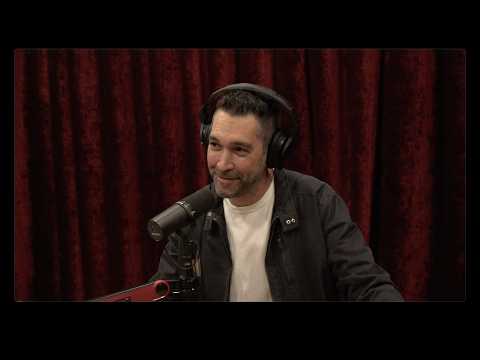
On PowerfulJRE episode #2474, Joe Rogan and libertarian commentator Dave Smith spent a substantial chunk of their conversation tearing apart US foreign policy on Iran, Israel, and Gaza, arguing that military-industrial complex interests — not national security — are what keep American troops and dollars flowing into the Middle East. The conversation aired against the backdrop of ongoing conflict in Gaza and escalating tensions with Iran, with Smith drawing sharp parallels to the Iraq and Afghanistan disasters. Both hosts questioned whether Donald Trump, despite his anti-interventionist posturing, is being quietly steered toward another war he once claimed to oppose.
The US Military-Industrial Complex and Middle East Intervention
The phrase 'US foreign policy Iran Israel Gaza' gets thrown around a lot, but Rogan and Smith's conversation on Joe Rogan Experience #2474 - Dave Smith cuts to 'the part most analysts skip: who profits when the bombs drop.'
How financial interests drive foreign policy decisions
Smith's argument is pretty blunt — perpetual conflict in the Middle East isn't a policy failure, it's a business model.
The defense contracting ecosystem depends on sustained military engagement, and that dependency shapes which options ever make it onto the table in Washington.
The revolving door between government and defense contractors
Officials move freely between government positions and private defense interests, which Smith frames not as a coincidence but as the actual operating system of American foreign policy.
The result, he argues, is that diplomatic off-ramps get structurally deprioritized — not because they wouldn't work, but because they don't generate the same financial returns as military ones.
The Israeli-Palestinian Conflict: Examining Military Solutions vs. Political Independence
Smith came in with a clear position on Gaza: what's happening is collective punishment, and the scale of it doesn't hold up to any honest proportionality argument.
Civilian casualties and humanitarian concerns in Gaza
He's not subtle about it — children are dying in large numbers, and the justifications offered keep shifting without ever quite landing.
Rogan, who typically plays the curious skeptic, didn't push back hard here, which itself says something about where that particular conversation has moved in mainstream discourse.
Why diplomatic alternatives remain unexplored
Smith's sharpest point is the one that gets least airtime: genuine Palestinian self-determination has never seriously been offered, so the claim that military force is the only remaining option is, at minimum, premature.
You can't exhaust diplomatic solutions you never tried.
Iran War Risk: Lessons from Iraq and Afghanistan
Both hosts land on Iran with the kind of exhausted certainty you get from watching the same movie twice — the justifications are different, the script is identical.
Historical parallels and repeated policy failures
Iraq was weapons of mass destruction. Afghanistan was counterterrorism. The throughline, Smith argues, is that the stated rationale rarely survives contact with the actual outcome, and yet the appetite for the next intervention never seems to diminish.
The human and financial costs of both wars are well-documented at this point, which makes the enthusiasm for a potential conflict with Iran either delusional or deliberately incurious.
Political manipulation and geopolitical motivations
The specific target of Smith's frustration here is Donald Trump, who ran — and won — partly on an anti-interventionist platform, and who Smith believes is being maneuvered toward war with Iran by interests aligned with Israeli foreign policy goals rather than American ones.
Whether Trump is a willing participant or a useful instrument is, per Smith, almost beside the point.
Political Accountability and Transparency in Foreign Policy
The broader problem both hosts keep circling back to is structural: the mechanisms that should catch bad foreign policy decisions don't really work.
Why government misconduct goes uninvestigated
Actions that would end careers at lower levels of government get absorbed quietly at the top, Smith argues, because the people responsible for accountability are often implicated in the same ecosystem.
It's less a conspiracy than a mutually beneficial arrangement that nobody with power has much incentive to disrupt.
Public skepticism of institutional honesty
Rogan's audience didn't find him because they trust institutions — they found him partly because they don't.
The fact that a three-hour conversation between a comedian and a libertarian podcaster is where a lot of people are processing questions about Iran and Gaza tells you something about how far official credibility has slipped.
Our Analysis: Rogan and Smith are sharp on media decay and the Iraq-style logic creeping into Iran war talk — that skepticism is earned. But the Gaza framing leans heavily on humanitarian optics while glossing over Hamas's structural role, which weakens an otherwise coherent anti-interventionist argument.
This fits a broader pattern: long-form podcasts are now doing the foreign policy debate work that op-ed pages abandoned when they picked sides.
Watch for more libertarian-right voices like Smith becoming the default antiwar position — a lane the left vacated and isn't getting back anytime soon.
Source: Based on a video by PowerfulJRE — Watch original video
This article was generated by NoTime2Watch's AI pipeline. All content includes substantial original analysis.
Related Articles

Joe Rogan #2475: Andrew Jarecki on Alabama Prison Crisis
Alabama's prison system is killing people, and a new documentary wants you to know why. Andrew Jarecki, director of The Jinx, joined PowerfulJRE for episode #2475 to discuss his latest film 'The Alabama Solution,' co-directed with Charlotte Kaufman, which exposes rampant deaths, guard-run drug trafficking, and a state government that responded to a damning DOJ report by hiring construction companies instead of fixing anything. The Alabama prison system human rights abuses detailed in the film — from unchecked violence to forced labor echoing convict leasing — paint a picture of a system designed, whether intentionally or not, to fail the people inside it.
JRE #2473: Bill Thompson - Military Cyber Operations Revealed
Retired Army Chief Warrant Officer Bill Thompson broke down the inner workings of U.S. military cyber offensive operations on PowerfulJRE episode #2473, 'Joe Rogan Experience #2473 - Bill Thompson.' Thompson, who built and ran signal intelligence and computer network operations units across Iraq, Afghanistan, and the Philippines, gave one of the more technically grounded public accounts of how the military exploits enemy networks and devices in active combat zones. For anyone wondering what military cyber operations signals intelligence actually looks like from the inside, this is about as close as it gets without a security clearance.

Jeff Ross on Colon Cancer & Diet on Joe Rogan Podcast
Jeff Ross opened up about his colon cancer diagnosis on PowerfulJRE episode #2472, 'Joe Rogan Experience #2472 - Jeff Ross,' turning a casual chat with Joe Rogan into a surprisingly urgent conversation about colon cancer early detection diet and why most people wait too long to get screened. Ross, who caught his cancer early enough to act on it, credited the colonoscopy with saving his life and spent a good chunk of the episode breaking down how his eating habits — red meat, processed food, the usual suspects — likely contributed to the diagnosis. It's the kind of health talk that actually sticks because it's coming from a comedian, not a pamphlet.