JRE #2473: Bill Thompson - Military Cyber Operations Revealed
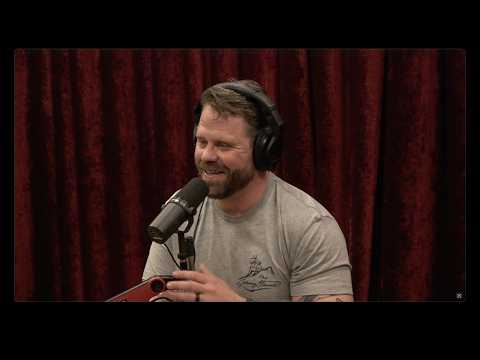
Retired Army Chief Warrant Officer Bill Thompson broke down the inner workings of U.S. military cyber offensive operations on PowerfulJRE episode #2473, 'Joe Rogan Experience #2473 - Bill Thompson.' Thompson, who built and ran signal intelligence and computer network operations units across Iraq, Afghanistan, and the Philippines, gave one of the more technically grounded public accounts of how the military exploits enemy networks and devices in active combat zones. For anyone wondering what military cyber operations signals intelligence actually looks like from the inside, this is about as close as it gets without a security clearance.
What is Military Cyber Offensive Operations?
Military cyber operations signals intelligence isn't just monitoring traffic — it's active exploitation, and Thompson spent his career at the sharp end of it as a Chief Warrant Officer in the U.S. Army.
His work spanned signal intelligence units, communications interception, and what the military calls computer network operations, all feeding actionable intelligence directly to combat commanders in the field. The full conversation is available on PowerfulJRE: Joe Rogan Experience #2473 - Bill Thompson.
Signal Intelligence (SIGINT) and Communications Intelligence (COMINT)
Thompson's teams intercepted communications across multiple theaters, mapping out enemy patterns of life from the signals they left behind.
The work wasn't passive listening. It involved identifying targets, correlating intercepts with known actors, and turning raw signal data into something a commander could actually use before a mission.
Computer Network Operations (CNO) in Combat
On the network side, Thompson describes his teams as essentially ethical hackers with a very specific employer — exploiting unpatched systems to gain access, gather intelligence, and, where needed, disrupt adversary capabilities.
He was involved early in the military's development of offensive cyber doctrine, working out what CNO could actually do in a kinetic fight before most people in the building had an opinion on it.
How Military Cyber Intelligence Gathering Works
The intelligence cycle in cyber operations moves fast. Thompson explains it as a loop — collect, exploit, analyze, disseminate — run under serious time pressure when troops are already in contact.
Network Exploitation and Data Forensics
A big part of Thompson's work involved exploiting the gaps that organizations like IS or insurgent networks left open — unpatched routers, default credentials, poorly secured comms infrastructure.
Those gaps don't stay open forever, which is why his teams had to move quickly once they had access, extracting what they needed before the window closed.
The Role of Cyber Operations in Modern Combat
Thompson is clear that cyber isn't a separate domain sitting in a server room somewhere — it's woven into ground operations, directly shaping targeting decisions and force protection.
Intelligence Analysis from Captured Devices
When devices were seized during raids, Thompson's teams conducted forensic analysis on the spot — pulling contacts, messages, location data, and network associations that could immediately reorient a follow-on operation.
He describes cases where a single captured phone unraveled an entire network because people reuse contacts and rarely sanitize their devices before they get picked up.
Building a Career in Military Cyber Operations
Thompson didn't start in cyber — he came up through conventional signals work and transitioned as the military started formalizing its offensive cyber capabilities, essentially growing with the field.
Skills and Training Requirements
The technical baseline matters — networking fundamentals, operating system architecture, scripting — but Thompson points out that the analytical mindset is harder to train than the technical skills.
His path ran through the U.S. Army's signal intelligence pipeline, with additional development through what he describes as early, largely improvised cyber units that were building doctrine as they went.
Our Analysis: Thompson's strongest material is the mundane military stuff — budget incentives that punish efficiency, cyber ops that most people don't know exist. That's the episode worth your time.
The rendezvous and coming-of-age tangents feel like Rogan bait, but they connect to a real media pattern: veterans getting platformed as cultural philosophers rather than domain experts, which dilutes the actual expertise they bring.
The cyber privacy angle will age well — as AI training data becomes a legal battleground, Thompson's framing of users-as-product is going to look less paranoid and more prophetic.
What's also worth noting is how rare this kind of technically credible public testimony actually is. Most public-facing cyber content skews either toward sensationalized nation-state hacking narratives or dry policy wonkery that loses non-specialists immediately. Thompson sits in an unusual middle ground — operational enough to be specific, retired enough to be candid. That combination doesn't come along often, and it raises a legitimate question about why the military doesn't produce more of it deliberately. Controlled public education about what offensive cyber actually looks like in a combat context would probably do more for recruitment and public trust than most official messaging campaigns. The fact that this conversation happened on a podcast rather than through any official channel says something about where credible institutional communication currently stands.
Source: Based on a video by PowerfulJRE — Watch original video
This article was generated by NoTime2Watch's AI pipeline. All content includes substantial original analysis.
Related Articles
Joe Rogan, Dave Smith on US Foreign Policy & Middle East
On PowerfulJRE episode #2474, Joe Rogan and libertarian commentator Dave Smith spent a substantial chunk of their conversation tearing apart US foreign policy on Iran, Israel, and Gaza, arguing that military-industrial complex interests — not national security — are what keep American troops and dollars flowing into the Middle East. The conversation aired against the backdrop of ongoing conflict in Gaza and escalating tensions with Iran, with Smith drawing sharp parallels to the Iraq and Afghanistan disasters. Both hosts questioned whether Donald Trump, despite his anti-interventionist posturing, is being quietly steered toward another war he once claimed to oppose.

Joe Rogan #2475: Andrew Jarecki on Alabama Prison Crisis
Alabama's prison system is killing people, and a new documentary wants you to know why. Andrew Jarecki, director of The Jinx, joined PowerfulJRE for episode #2475 to discuss his latest film 'The Alabama Solution,' co-directed with Charlotte Kaufman, which exposes rampant deaths, guard-run drug trafficking, and a state government that responded to a damning DOJ report by hiring construction companies instead of fixing anything. The Alabama prison system human rights abuses detailed in the film — from unchecked violence to forced labor echoing convict leasing — paint a picture of a system designed, whether intentionally or not, to fail the people inside it.

Jeff Ross on Colon Cancer & Diet on Joe Rogan Podcast
Jeff Ross opened up about his colon cancer diagnosis on PowerfulJRE episode #2472, 'Joe Rogan Experience #2472 - Jeff Ross,' turning a casual chat with Joe Rogan into a surprisingly urgent conversation about colon cancer early detection diet and why most people wait too long to get screened. Ross, who caught his cancer early enough to act on it, credited the colonoscopy with saving his life and spent a good chunk of the episode breaking down how his eating habits — red meat, processed food, the usual suspects — likely contributed to the diagnosis. It's the kind of health talk that actually sticks because it's coming from a comedian, not a pamphlet.