Afroman Turns Police Raid Into Music - The Full Story
Rapper Afroman turned a police raid on his home into a music project after officers trashed his property and found nothing illegal. Josh Johnson breaks down the full story in his video 'How Afroman responded to police raiding his home' — covering how cops showed up while Afroman was out of town, pointed AR-15s at his wife and kids, cracked his safe open (empty), confirmed he wasn't being charged with anything, and then smirked when he asked them to fix his door.
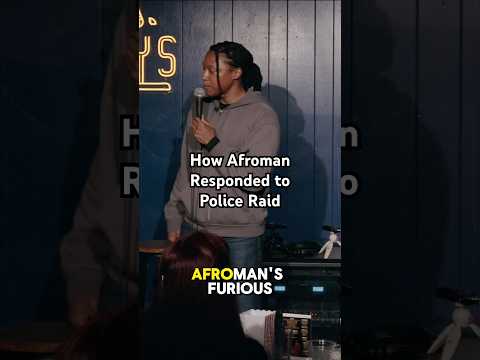
The Raid
While Afroman was away, police entered his home and confronted his family at gunpoint — AR-15s pointed at his wife and children.
He was out of town when it happened, so he joined via FaceTime, gave officers the combination to his safe himself, and watched them find absolutely nothing.
No Arrest, No Charges, No Explanation
After the safe came up empty, Afroman asked the officer on the call a pretty reasonable question: was he under arrest or facing charges?
The answer was no to both. No explanation for the raid was offered either.
The Door Comment That Started Everything
Police broke down his front door getting in. When Afroman asked for help fixing it, Officer Randy Walter reportedly smiled and told him that wasn't their problem.
That smile did a lot of work. According to Josh Johnson's coverage in How Afroman responded to police raiding his home, it's what pushed Afroman from angry to determined — the feeling of watching someone enjoy the fact that you can't do anything about what they just did to you.
His Response: Make Music About It
Afroman went with the one tool he actually had — he wrote songs about the raid, the officers involved, and specifically the door.
It's a very on-brand move for someone whose entire career is built on turning mundane frustrations into chart hits.
Our Analysis: Johnson nails the absurdity — cops trash your house, find nothing, and then shrug at the damage with a smile. What gets underplayed is how routine this is; qualified immunity means officers face almost zero accountability for botched raids, and Afroman's case is one of thousands that never make the news.
This fits a broader pattern of musicians and artists turning legal helplessness into cultural leverage — think N.W.A., think Rage Against the Machine. The difference is streaming now lets you monetize the grievance directly.
Afroman will probably profit more from these songs than the department will ever pay in damages.
But there's something worth sitting with beyond the clever reversal. The reason the door moment landed so hard — and the reason Johnson's video resonated — is that the smile is the whole story in miniature. It's not just an officer being dismissive. It's an institution communicating, very clearly, that the rules protecting you don't apply here. The smile says: we know there's nothing you can do. Most people in that situation have no recourse at all. Afroman had a recording studio.
That asymmetry raises a harder question the video doesn't fully explore: what happens to the people who don't have a platform? The botched raid isn't unusual. What's unusual is the ability to turn it into content with an audience. For every Afroman, there are countless people who eat the damage — broken door, traumatized kids, zero explanation — and have nowhere to put it. The story gets covered because there's a punchline. The punchline exists because Afroman is famous. The underlying problem doesn't require either.
That's not a criticism of Afroman using what he has. It's a reminder that the cultural leverage move only works if you already have cultural leverage. The rest of the time, the smile just lands and stays there.
Source: Based on a video by Josh Johnson — Watch original video
This article was generated by NoTime2Watch's AI pipeline. All content includes substantial original analysis.
Related Articles

Afroman Trial: Free Speech Wins vs Police Defamation
A jury ruled in favor of rapper Afroman in a defamation lawsuit brought by the police officers who raided his home in 2022, finding that his satirical songs about the raid were protected under the U.S. First Amendment. Officers had sued after Afroman turned surveillance footage of their conduct — including one officer's apparent fascination with a lemon pound cake — into viral music mocking them by name. Josh Johnson's video 'The Afroman Trial Explained: Cops vs Hip Hop' breaks down how the case went from an unwarranted drug raid to a courtroom win that doubled as a free speech lesson.
Josh Johnson on Cassette Tapes: The Physics Problem
Comedian Josh Johnson stumbled onto a physics problem he didn't expect: he couldn't explain how a cassette tape actually works. In his video "Please help me explain this to younger people," Johnson tries to walk a younger person through magnetic tape technology and realizes mid-explanation that he's lost on the actual physics. The moment lands as comedy, but it points to something real — most people who grew up with cassette tapes and CDs used them daily without ever understanding how a strip of coated plastic, or a pressed disc, became music.

US-Iran War: What Washington Isn't Telling You
The US-Iran war is going worse than Washington is letting on, according to Ian Carroll's latest video, 'War in Iran is not going as well as they're telling you.' Carroll, drawing on open-source satellite imagery and independent analysts, argues that Iran has successfully destroyed multi-billion-dollar US and Israeli radar systems, closed the Strait of Hormuz without firing a shot, and turned an early airstrike on a girls' school into a recruitment poster. He's openly anti-Israel and says so upfront — which is either a red flag or a refreshing change, depending on who you ask.