Afroman Sued for Defamation by Police Officers
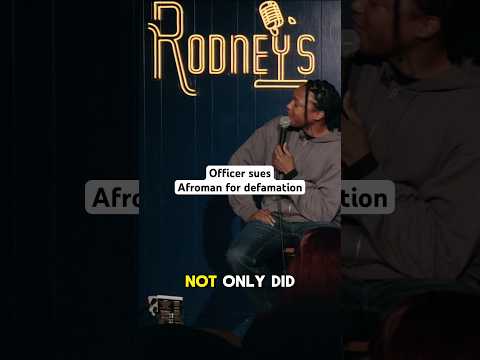
Police officers are suing rapper Afroman for defamation after he used footage of a police raid on his home in his music videos. Josh Johnson breaks the whole thing down in his video 'Officer sues Afroman for defamation,' and he is not entirely focused on the legal particulars. Specifically, he gets briefly but thoroughly derailed by the mention of pound cake. The lawsuit itself is real; the comic outrage over baked goods is Johnson's contribution.
The Lawsuit, Briefly
Officers who raided Afroman's Ohio home in 2022 claim he defamed them by putting their likenesses in music videos and merchandise without consent.
In his video Officer sues Afroman for defamation, Josh Johnson covers the basics, then immediately pivots to what he finds more interesting: the specific, almost poetic absurdity of the complaint's details.
The Pound Cake Problem
Somewhere in Johnson's reading of the situation, pound cake enters the picture, and the video quietly falls apart in the best way.
He floats the idea that part of the officer's grievance might involve receiving cakes — sent by Afroman's fans — framing it as a form of cruelty that was, inconveniently, also delicious.
Defamation by Dessert
The hypothetical complaint Johnson imagines goes something like: the defamation was harmful, the cakes were irresistible, and somehow Afroman is responsible for both.
He describes the pound cake as "the stickiest of the ickiest" and "so gooey" — language that does more damage to the lawsuit's gravitas than any actual legal counterargument could.
What the Joke Is Actually About
Johnson's point, buried under the bit, is that suing over being featured in a rap video is a stretch — and that officers inviting more public attention through a lawsuit might not have thought that one through.
The cake is a metaphor. Probably.
Our Analysis: Johnson nails the absurdity here — officers suing over song content sets a dangerous precedent where public figures use defamation law as a heckler's veto against criticism.
This fits a broader pattern of powerful institutions weaponizing litigation to silence unflattering portrayals, a trend that's accelerating as "reputation management" becomes its own legal industry.
Expect this case to get dismissed, but not before doing exactly what it was designed to do — cost Afroman time and money for the crime of making people laugh at cops.
What's worth sitting with, though, is the specific irony of the medium. Afroman didn't write an op-ed or file a complaint — he made music. The footage was of a real event that happened in his own home. The translation of that experience into art, and then into merchandise, is the kind of thing the First Amendment was designed to protect precisely because it makes the powerful uncomfortable. The officers' decision to sue doesn't just look thin legally; it looks like a category error. You don't counter a punchline with a subpoena.
There's also something telling about the fan cake angle, however much it gets played for laughs. If supporters of Afroman were mailing baked goods to officers, that's the public responding to a public story — messy, absurd, and entirely a consequence of the lawsuit drawing more attention to the original raid than the music videos ever did on their own. That's the own goal at the center of this whole thing, and Johnson identifies it cleanly even while pretending to be distracted by dessert.
Defamation law requires, at minimum, a false statement of fact. A music video using real footage of a real event, set to a beat, is not obviously that. The case may hinge on narrower questions about likeness rights and commercial use, but framing it as defamation is the kind of legal stretch that tends to collapse under scrutiny — and tends to generate exactly the kind of coverage that makes the plaintiff wish they'd stayed quiet.
The pound cake is funny. The underlying dynamic is less so. Cases like this have a chilling effect that extends well beyond Afroman — artists documenting their own experiences should not have to calculate whether the subjects of that documentation will sue them for making it entertaining.
Source: Based on a video by Josh Johnson — Watch original video
This article was generated by NoTime2Watch's AI pipeline. All content includes substantial original analysis.
Related Articles

Afroman Trial: Free Speech Wins vs Police Defamation
A jury ruled in favor of rapper Afroman in a defamation lawsuit brought by the police officers who raided his home in 2022, finding that his satirical songs about the raid were protected under the U.S. First Amendment. Officers had sued after Afroman turned surveillance footage of their conduct — including one officer's apparent fascination with a lemon pound cake — into viral music mocking them by name. Josh Johnson's video 'The Afroman Trial Explained: Cops vs Hip Hop' breaks down how the case went from an unwarranted drug raid to a courtroom win that doubled as a free speech lesson.

Josh Johnson on Cassette Tapes: The Physics Problem
Comedian Josh Johnson stumbled onto a physics problem he didn't expect: he couldn't explain how a cassette tape actually works. In his video "Please help me explain this to younger people," Johnson tries to walk a younger person through magnetic tape technology and realizes mid-explanation that he's lost on the actual physics. The moment lands as comedy, but it points to something real — most people who grew up with cassette tapes and CDs used them daily without ever understanding how a strip of coated plastic, or a pressed disc, became music.

US-Iran War: What Washington Isn't Telling You
The US-Iran war is going worse than Washington is letting on, according to Ian Carroll's latest video, 'War in Iran is not going as well as they're telling you.' Carroll, drawing on open-source satellite imagery and independent analysts, argues that Iran has successfully destroyed multi-billion-dollar US and Israeli radar systems, closed the Strait of Hormuz without firing a shot, and turned an early airstrike on a girls' school into a recruitment poster. He's openly anti-Israel and says so upfront — which is either a red flag or a refreshing change, depending on who you ask.