Candace Owens Exposes Lies in Erica Kirk's Story
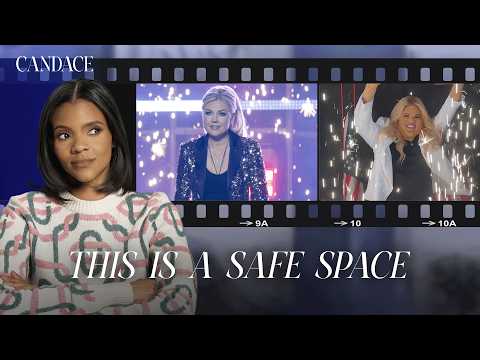
Candace Owens spent episode 317 of her show picking apart Erica Kirk's account of how she learned about her husband Charlie Kirk's death, and the story doesn't hold up. Police scanner audio puts Erica's Provo Airport pickup at 3:30 p.m., which blows a hole in the widely reported 4:40 p.m. tarmac reunion with TPUSA's Andrew Kovette — suggesting that reunion, if it happened there at all, was in Scottsdale rather than Provo. Owens also flags a Turning Point USA-linked plane that visited Fort Huachuca after the shooting, and argues that the smear campaigns coming her way are proof she's getting close to something.
The Tarmac Story Doesn't Add Up
In VIRAL! It's Okay Not To Believe A Word Erika Kirk Says. | Candace Ep 317, Candace Owens presents police scanner audio logged by her team that places Erica Kirk for a Provo Airport pickup at 3:30 p.m. — over an hour before the emotional tarmac embrace with Andrew Kovette that's been reported as a key moment in the aftermath of Charlie's death.
Owens' read: the hug happened in Scottsdale, not Provo, and Kovette's own account of being briefly in the dark about Charlie's condition fits the timeline of a Santa Barbara-to-Scottsdale flight that would've taken off right around when the shooting happened.
Erica Kirk's Timeline Keeps Shifting
Was she already airborne when she found out? Still at the airport? Owens lines up several of Erica's public statements side by side and they don't agree with each other, or with the scanner evidence.
Details about her mother's hospital status and what happened the night before the incident have also changed across different tellings, which Owens argues isn't grief-fog — it's a constructed narrative getting caught on its own seams.
The Fort Huachuca Detour
Investigator Baron Coleman flagged that a plane regularly used by Turning Point USA stopped at Fort Huachuca — a U.S. Army intelligence base in Arizona — on October 4th, then continued to Kallispel, Montana, reportedly a location associated with security debriefings.
Owens confirmed the flight data independently and doesn't present it as settled fact, but she's not pretending it's nothing either.
Comedians and Smear Campaigns
Comedian Drew Afualo posted a skit mocking the 'Christian grift' aesthetic of certain conservative women, Erica Kirk adjacent enough that Kovette reportedly went after Afualo online — which Owens treats as its own kind of tell.
Owens closes by noting that TPUSA's response to her reporting has been PR attacks rather than factual corrections, and she frames that as the most interesting data point of all.
Our Analysis: Owens raises genuinely odd inconsistencies in the timeline — the Provo vs. Scottsdale discrepancy is hard to explain away — but she buries real questions under layers of conspiratorial theatre that make the whole thing easier to dismiss.
This fits a broader pattern where legitimate media skepticism gets hijacked by personality feuds, turning potential accountability journalism into content fuel.
If the TPUSA plane's Fort Huachuca detour ever gets a clean paper trail, this story resurfaces with teeth. Until then, it's mostly noise that protects the people it claims to expose.
What's worth sitting with, though, is the structural problem this episode illustrates. The scanner audio and the competing timestamps are the kind of granular detail that traditional investigative outlets used to own. That beat has largely been abandoned — defunded, deprioritized, or quietly traded for access — which leaves the territory open to anyone willing to work it, regardless of their other baggage. Owens is working it. That's not an endorsement of her conclusions; it's an observation about who's left in the field.
The Fort Huachuca angle is the element most likely to either die quietly or explode later. Military-adjacent flight data showing up in the orbit of a civilian political organization is the kind of thread that looks like nothing until it doesn't. The problem is that Owens has spent enough credibility on shakier claims that if this thread does lead somewhere, she may not be the person anyone trusts to pull it.
The smear-campaign framing at the end is where the episode loses the most ground. Treating institutional pushback as automatic confirmation of proximity to truth is a closed loop — unfalsifiable by design — and it's the move that separates genuine accountability work from content that's just built to feel like it. Owens clearly knows how to find a real seam. Whether she's interested in following it past the point where it stops generating engagement is the open question this episode doesn't answer.
Source: Based on a video by Candace Owens — Watch original video
This article was generated by NoTime2Watch's AI pipeline. All content includes substantial original analysis.
Related Articles

Afroman Trial: Free Speech Wins vs Police Defamation
A jury ruled in favor of rapper Afroman in a defamation lawsuit brought by the police officers who raided his home in 2022, finding that his satirical songs about the raid were protected under the U.S. First Amendment. Officers had sued after Afroman turned surveillance footage of their conduct — including one officer's apparent fascination with a lemon pound cake — into viral music mocking them by name. Josh Johnson's video 'The Afroman Trial Explained: Cops vs Hip Hop' breaks down how the case went from an unwarranted drug raid to a courtroom win that doubled as a free speech lesson.
Josh Johnson on Cassette Tapes: The Physics Problem
Comedian Josh Johnson stumbled onto a physics problem he didn't expect: he couldn't explain how a cassette tape actually works. In his video "Please help me explain this to younger people," Johnson tries to walk a younger person through magnetic tape technology and realizes mid-explanation that he's lost on the actual physics. The moment lands as comedy, but it points to something real — most people who grew up with cassette tapes and CDs used them daily without ever understanding how a strip of coated plastic, or a pressed disc, became music.
US-Iran War: What Washington Isn't Telling You
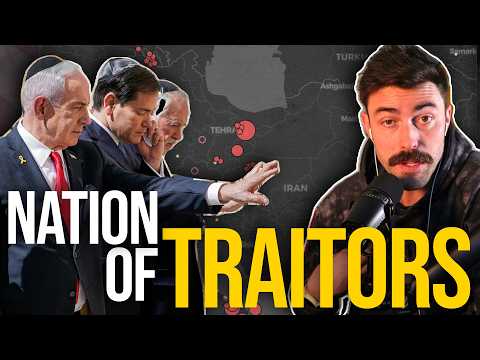
The US-Iran war is going worse than Washington is letting on, according to Ian Carroll's latest video, 'War in Iran is not going as well as they're telling you.' Carroll, drawing on open-source satellite imagery and independent analysts, argues that Iran has successfully destroyed multi-billion-dollar US and Israeli radar systems, closed the Strait of Hormuz without firing a shot, and turned an early airstrike on a girls' school into a recruitment poster. He's openly anti-Israel and says so upfront — which is either a red flag or a refreshing change, depending on who you ask.