Druski's Erika Kirk Skit: Candace Owens' HILARIOUS Take
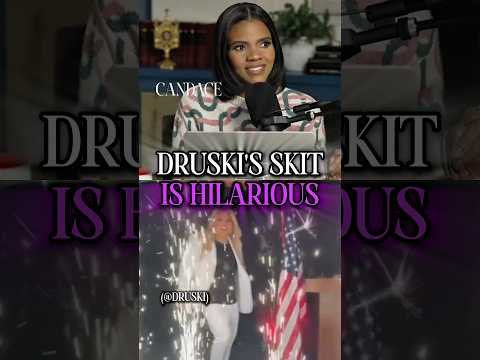
Candace Owens spent part of a recent video praising comedian Druski's viral Erika Kirk parody, calling it one of the rare skits that made both sides of the political aisle laugh simultaneously. In 'Druski's Erika Kirk Skit Was HILARIOUS,' Owens breaks down why the bit landed so hard — it nails a very specific type of influencer who drops Bible verses like a disclaimer before saying something nasty. She also floats the possibility that she herself is the 'conservative black woman' referenced in similar comedy, and says she's completely fine with that.
Why the Skit Worked
In Druski's Erika Kirk Skit Was HILARIOUS 😭, Candace Owens argues the Druski skit hit because it targeted something people across the political spectrum already quietly noticed — certain influencers who use religious language as a kind of reputational airbag.
The formula, as she describes it: say something catty, cite scripture, repeat. Druski just put it on screen.
The Bible Verse Problem
Owens has a specific criticism for female influencers who lean on Christianity to soften content that is, by any reading, just aggressive online behaviour dressed up in a verse or two.
She frames it as disingenuous — not a religious objection, more a consistency one. If you're going to invoke God, she implies, maybe don't also be posting like that.
Owens on Being the Punchline
She suspects the vague 'conservative black woman' referenced in similar comedy might be a nod to her — and her response is essentially: fine, good, that's how you know you matter.
She points to Dave Chappelle and Saturday Night Live having both taken a swing at her as evidence that getting parodied is a milestone, not an insult. Hard to argue with the logic.
Influence Is Not the Same as Money
Owens uses part of the video to draw a line between having resources or official backing and actually moving public opinion — her argument being that some figures have one and not the other, and the frustration that comes with that gap tends to show.
She doesn't name names, which is doing a lot of work in that segment.
Our Analysis: Owens is right that Druski's skit landed because it targeted a real, recognizable behavior — the "Bible verse as armor" move is genuinely overused online. The crowd laughing across political lines proves the joke had teeth beyond partisan point-scoring.
Where she loses the thread is framing it as a conservative-women-under-attack pattern — Druski roasts everyone with a platform; that's his brand, not a culture war.
The broader trend here is audiences increasingly punishing performative piety, and comedians are becoming the most effective fact-checkers of influencer culture. That pressure will only grow.
What's worth sitting with longer is the influence-versus-money distinction Owens raises, almost in passing. It's actually the most substantive observation in the video. The influencer economy has created a class of people who are well-funded, algorithmically amplified, and institutionally backed — but who generate almost no genuine persuasion. Their audiences agree with them before the video starts. Owens is implying, without quite saying it, that reach without trust is a ceiling, and a lot of people are bumping up against it right now.
The Druski angle connects to this more than it might seem. Part of why his parody worked is that he has the kind of cross-demographic credibility that most politically aligned creators simply don't. He's not operating inside a tribe. That freedom is exactly what makes the joke land — and it's the same freedom that most of the people he's mocking have traded away for a more reliable but narrower audience.
There's also something telling about Owens being comfortable — genuinely comfortable, by all appearances — with being a punchline. That's a rarer posture than it sounds. Most influencers at her level treat parody as a threat to be managed, which usually makes the parody funnier. Treating it as a credential is a smarter play, and it also happens to be harder to fake.
The performative piety critique will resonate most with people who are already devout, which is an underappreciated irony. The loudest objections to hollow scripture-citing tend to come from people who take the scripture seriously — not from secular critics. Owens is speaking to that audience whether she's framing it that way or not.
Source: Based on a video by Candace Owens — Watch original video
This article was generated by NoTime2Watch's AI pipeline. All content includes substantial original analysis.
Related Articles

Afroman Trial: Free Speech Wins vs Police Defamation
A jury ruled in favor of rapper Afroman in a defamation lawsuit brought by the police officers who raided his home in 2022, finding that his satirical songs about the raid were protected under the U.S. First Amendment. Officers had sued after Afroman turned surveillance footage of their conduct — including one officer's apparent fascination with a lemon pound cake — into viral music mocking them by name. Josh Johnson's video 'The Afroman Trial Explained: Cops vs Hip Hop' breaks down how the case went from an unwarranted drug raid to a courtroom win that doubled as a free speech lesson.
Josh Johnson on Cassette Tapes: The Physics Problem
Comedian Josh Johnson stumbled onto a physics problem he didn't expect: he couldn't explain how a cassette tape actually works. In his video "Please help me explain this to younger people," Johnson tries to walk a younger person through magnetic tape technology and realizes mid-explanation that he's lost on the actual physics. The moment lands as comedy, but it points to something real — most people who grew up with cassette tapes and CDs used them daily without ever understanding how a strip of coated plastic, or a pressed disc, became music.
US-Iran War: What Washington Isn't Telling You
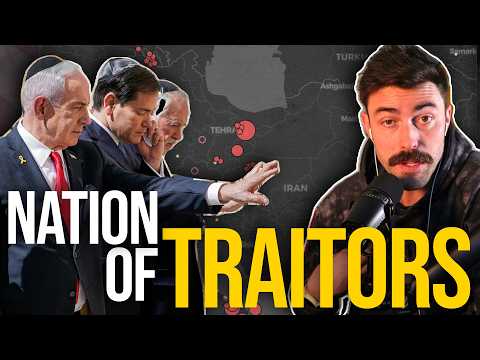
The US-Iran war is going worse than Washington is letting on, according to Ian Carroll's latest video, 'War in Iran is not going as well as they're telling you.' Carroll, drawing on open-source satellite imagery and independent analysts, argues that Iran has successfully destroyed multi-billion-dollar US and Israeli radar systems, closed the Strait of Hormuz without firing a shot, and turned an early airstrike on a girls' school into a recruitment poster. He's openly anti-Israel and says so upfront — which is either a red flag or a refreshing change, depending on who you ask.