Iran War Escalates: US/Israel Strikes & Global Impact
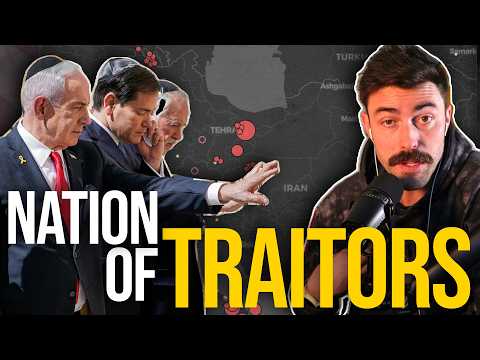
The US and Israel have struck Iranian civilian infrastructure — including a desalination plant and oil facilities — and the fallout, according to Ian Carroll's video <a href="https://youtube.com/watch?v=xyqhicXBhyA">Iran war escalates in all the wrong directions</a>, reaches far beyond Tehran. Carroll argues the strikes expose Gulf allies like Bahrain, Qatar, and the UAE to devastating retaliation, drain American missile stockpiles, hand China a live-fire intelligence bonanza, and are quietly being driven, at least in part, by religious motivations most Western audiences have never heard explained out loud.

Hitting Civilian Infrastructure Opens a Door Nobody Wants Open
The US approved an emergency weapons sale to Israel, which was followed by strikes on a desalination plant on Keshm Island and Iranian oil infrastructure.
Carroll's problem with this isn't just the strikes themselves — it's the precedent. Bahrain, Qatar, the UAE, and Saudi Arabia all run on desalination. Their oil facilities are exposed. Iran now has a template, and those allies are the ones standing in front of it.
China Is Taking Notes — Lots of Them
While the missiles are flying, China is watching every single one of them, and not casually.
Carroll points to analysis around China's Jilin-1 satellite constellation, which includes birds capable of high-definition video, feeding real-time data on US naval formations, air defense reactions, and troop movements into AI systems built to process exactly this kind of thing. Ukraine didn't give China this. This conflict apparently does.
The Religious Dimension Nobody's Talking About on Cable News
Carroll leans into Tucker Carlson's framing here: certain Israeli and Christian Zionist factions are openly advocating for demolishing one of Islam's holiest sites in Jerusalem and replacing it with a new Jewish temple.
That's not a fringe internet talking point — Carlson has been platforming it, and Carroll argues it's closer to the actual engine of the conflict than anything being discussed in the secular Western media cycle. Whether you find that credible or alarming probably depends on how much of this you've been following.
US Officials, Foreign Priorities, and a Thinning Arsenal
In his video Iran war escalates in all the wrong directions, Ian Carroll backs Carlson's claim that figures like Lindsey Graham are actively working to pull the US into a war with Iran on Israel's behalf — including, allegedly, feeding manipulated intelligence upward to people who brief the president.
On the military side, the math is getting uncomfortable. Missile interceptor stockpiles are being routed to Israel, leaving US bases and Gulf partners exposed. Iran, Carroll notes, hasn't yet touched its more advanced arsenal. And sitting just over the horizon: Poland, France, South Korea, and Japan are all quietly reconsidering their nuclear posture, which is the kind of proliferation spiral that tends to be much easier to start than stop.
Our Analysis: Carroll is right that hitting Iranian civilian infrastructure is a strategic own-goal — it hands Iran a propaganda victory and gives China a live-fire intelligence harvest at zero cost to Beijing.
The nuclear proliferation angle is undersold here. If Iran goes nuclear, the domino effect in East Asia and Eastern Europe is the real story, not the Middle East itself.
Watch South Korea. Seoul has the technical capability to go nuclear in months, and a destabilized nonproliferation norm gives them every political excuse they've been waiting for.
There's also a credibility problem brewing for US extended deterrence that rarely gets named directly. Every interceptor missile shipped to Israel is one fewer available to reassure treaty allies in Asia and Europe. Those allies are watching the inventory math too, and the quiet conversations happening in Tokyo, Warsaw, and Seoul aren't about gratitude — they're about self-sufficiency. Once that calculus tips, no diplomatic reassurance reverses it.
The desalination precedent deserves more attention than it's getting. The Gulf states hosting US bases — Bahrain's Fifth Fleet, Qatar's Al Udeid — are now measurably more vulnerable than they were before these strikes. That's not an abstract geopolitical point; it's a force-protection problem that constrains US operational flexibility in any future escalation. If Iran retaliates against Gulf water infrastructure and a US partner state faces a civilian crisis, Washington gets pulled into a second front whether it wants one or not.
Finally, the religious framing Carroll raises, whatever one makes of its policy weight, points to a genuine information gap in mainstream Western coverage. Audiences are being asked to evaluate a conflict while being shielded from one of the motivating narratives driving some of the key actors. That's not a conspiracy — it's just bad journalism, and it leaves readers poorly equipped to judge the durability of any ceasefire or negotiated pause that doesn't address the underlying ideological drivers.
Source: Based on a video by Ian Carroll — Watch original video
This article was generated by NoTime2Watch's AI pipeline. All content includes substantial original analysis.
Related Articles

Afroman Trial: Free Speech Wins vs Police Defamation
A jury ruled in favor of rapper Afroman in a defamation lawsuit brought by the police officers who raided his home in 2022, finding that his satirical songs about the raid were protected under the U.S. First Amendment. Officers had sued after Afroman turned surveillance footage of their conduct — including one officer's apparent fascination with a lemon pound cake — into viral music mocking them by name. Josh Johnson's video 'The Afroman Trial Explained: Cops vs Hip Hop' breaks down how the case went from an unwarranted drug raid to a courtroom win that doubled as a free speech lesson.

Josh Johnson on Cassette Tapes: The Physics Problem
Comedian Josh Johnson stumbled onto a physics problem he didn't expect: he couldn't explain how a cassette tape actually works. In his video "Please help me explain this to younger people," Johnson tries to walk a younger person through magnetic tape technology and realizes mid-explanation that he's lost on the actual physics. The moment lands as comedy, but it points to something real — most people who grew up with cassette tapes and CDs used them daily without ever understanding how a strip of coated plastic, or a pressed disc, became music.
US-Iran War: What Washington Isn't Telling You
The US-Iran war is going worse than Washington is letting on, according to Ian Carroll's latest video, 'War in Iran is not going as well as they're telling you.' Carroll, drawing on open-source satellite imagery and independent analysts, argues that Iran has successfully destroyed multi-billion-dollar US and Israeli radar systems, closed the Strait of Hormuz without firing a shot, and turned an early airstrike on a girls' school into a recruitment poster. He's openly anti-Israel and says so upfront — which is either a red flag or a refreshing change, depending on who you ask.