Claude Code Gets Desktop Autopilot: Mac Preview Revealed
Anthropic just gave Claude Code the ability to control your mouse, keyboard, and screen — essentially turning it into a desktop autopilot. The feature, currently a Mac-only research preview for Pro users, lets Claude visually parse your screen and operate apps the same way you would. @nateherk's video 'Claude Code Just Got Another Huge Upgrade' walks through what it can actually do, what's broken, and where Anthropic is clearly headed with this.
What It Can Actually Do
Claude takes screenshots, reads what's on screen, and interacts with whatever it finds — buttons, file dialogs, input fields, and more.
@nateherk demonstrated this by having Claude open OBS, visually locate the 'Start Recording' button, and click it — no API, no script, just Claude looking at pixels and acting on them. You can watch the full walkthrough in Claude Code Just Got Another Huge Upgrade.
It also navigated Finder, grabbed a PDF, and dropped it into a ClickUp DM. Two separate apps, zero hand-holding after the initial permission prompt.
Remote Control via Dispatch
Pair computer control with Claude's 'dispatch' feature and you can trigger desktop tasks from your phone while your Mac sits at home doing the actual work.
The demo shows a text command sent from a mobile device instructing Claude to run a calculator operation and log the result in Notes — which it did, as long as the machine stayed awake and connected.
Browser Automation Is Off the Table (For Now)
Claude cannot click or type inside a web browser directly — Anthropic locked that out for security reasons.
If you need browser automation, you're routing through a Chrome extension or something like Playwright instead. @nateherk notes that native web automation looks like it's coming, but it's not here yet.
Availability and Known Rough Edges
It's Mac-only, Pro-only, not available on enterprise plans, and still carrying a 'research preview' label — meaning occasional slowness and bugs are on the table.
Windows support is reportedly a few weeks out. To enable it, you turn on 'computer use' in the Claude desktop app and grant accessibility permissions, which Claude then remembers per session.
Our Analysis: Nate gets the excitement right, but the browser limitation is doing a lot of heavy lifting here — an AI that can't click the web in 2025 is missing most of the action.
This fits squarely into the "agents that actually do things" wave, where the benchmark shifts from smart answers to completed tasks.
The real tell is the promise of native web automation coming later — once that lands, the gap between Claude Code and a junior employee running your busywork closes fast.
What's worth sitting with, though, is the architecture underneath this. Screen-reading and pixel-level interaction is a fundamentally different approach than tool-calling or API integration. It's slower and more fragile — a UI redesign can silently break a workflow overnight — but it's also universal. Claude doesn't need a vendor to build an integration. If a human can see it and click it, Claude theoretically can too. That's a much bigger surface area than any API ecosystem ever will be.
The accessibility permissions requirement is also worth flagging for anyone deploying this in a workplace context. Granting an AI agent OS-level input control is a meaningful trust decision, and the 'research preview' label isn't just hedging on stability — it's a signal that Anthropic hasn't fully worked out the security and audit story yet. For personal productivity that's fine. For anything touching sensitive systems, it warrants a harder look.
The dispatch angle is quietly the most interesting part of the demo. Remote-triggering desktop tasks from a phone essentially turns your Mac into a personal compute node. That's less "AI assistant" and more "always-on automation server" — a framing that will matter a lot once the rough edges get smoothed out and enterprise plans get access.
Right now this is a power-user toy. Six months from now, depending on how fast the browser automation and Windows rollout land, it could be something people actually build workflows around.
Source: Based on a video by @nateherk — Watch original video
This article was generated by NoTime2Watch's AI pipeline. All content includes substantial original analysis.
Related Articles
Paperclip AI Tool: Turn Claude Code Into an Agent Company
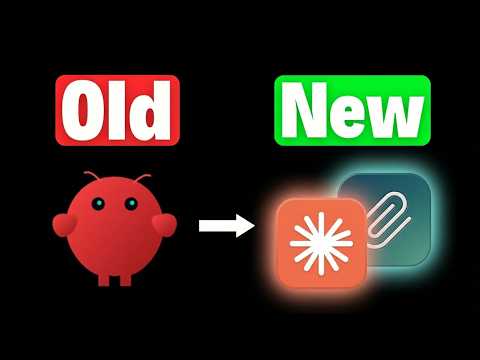
A new open-source tool called Paperclip lets you run an entire AI-driven company from a single dashboard, with minimal human input required. Nate Herk of Nate Herk | AI Automation broke it down in his video 'This One Tool Turns Claude Code Into an Entire Agent Company,' showing how the platform orchestrates intelligent agents in AI roles — CEO, marketer, engineer — while the user just sets goals and watches the thing run. It's free, it's on GitHub, and it's gaining traction fast among people who'd rather manage a board meeting than a Slack channel.
Cloud Code Auto Mode: Stop Bypass Permissions
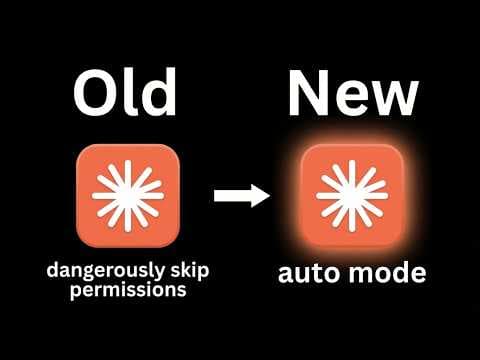
Claude's Cloud Code has a new 'auto mode' that handles permissions on its own, and @nateherk's video 'STOP Using Bypass Permissions, Use This New Feature Instead' breaks down why it matters. Until now, developers were stuck choosing between constant approval prompts that killed their workflow or a full permission bypass that let the AI do basically anything unchecked — neither great. Auto mode sits in the middle, classifying each action for risk before running it, so safe stuff executes quietly and sketchy stuff gets flagged. It's in research preview and currently limited to Team plan subscribers.
Gemini 3.1 Flash Live: The Future of Voice Agents
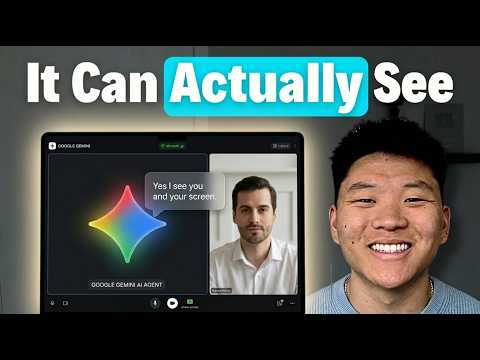
Google's Gemini 3.1 Flash Live ditches the old speech-to-text-to-speech pipeline in favor of direct audio processing, and according to @nateherk's breakdown in 'Gemini 3.1 Flash Live Just Changed Voice Agents Forever,' the difference is noticeable. The model posts a 19% improvement in multi-step function calling over its predecessor, handles noisy real-world environments well, and is already free to test in Google AI Studio. There are rough edges — it goes silent mid-conversation while executing functions — but the overall package is a genuine step forward for anyone building voice agents.