Paperclip AI Tool: Turn Claude Code Into an Agent Company
A new open-source tool called Paperclip lets you run an entire AI-driven company from a single dashboard, with minimal human input required. Nate Herk of Nate Herk | AI Automation broke it down in his video 'This One Tool Turns Claude Code Into an Entire Agent Company,' showing how the platform orchestrates intelligent agents in AI roles — CEO, marketer, engineer — while the user just sets goals and watches the thing run. It's free, it's on GitHub, and it's gaining traction fast among people who'd rather manage a board meeting than a Slack channel.
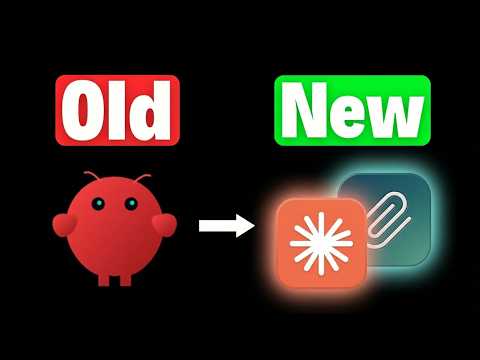
What Paperclip Actually Does With AI Agents
Paperclip is an open-source orchestration platform that lets you spin up a virtual company staffed entirely by agents in AI — each with a defined role, a set of tools, and a configuration file that describes how they're supposed to behave.
You're not managing those agents day-to-day. You set a mission, define success metrics, and step back. The platform handles the org chart.
Heartbeats Keep Intelligent Agents AI-Ready Around the Clock
Each agent runs on a 'heartbeat' system — they wake up on a schedule, load fresh context and memory, check their task queue, and get back to work, no nudging required.
Agents also have what Herk calls a 'soul' file: a plain-text document that defines the agent's role and responsibilities, with behavioral guidelines living alongside separate files for tools and execution checklists.
Dashboard, Ticketing, and Keeping Things From Going Off the Rails
The main interface gives you a live view of every agent, every task, and every issue — structured like a project management tool, because that's basically what it is.
Critical decisions — hiring a new agent, migrating infrastructure — get flagged for human approval before anything happens. You can comment, review logs, and close tickets. It's more 'CTO reviewing a PR' than 'babysitting a chatbot.'
Claude Code as Your Executive Assistant
Herk's recommended power move: feed Claude Code the entire Paperclip GitHub repository so it understands the platform's architecture, then use it as an executive layer to configure agents, manage secrets, and plan things like VPS migrations.
The platform also supports importing pre-built company templates — complete with agents, skills, and organizational structure already defined — which cuts setup time from hours to minutes. Skills can be pulled in from external repositories like skills.sh, though Herk flags third-party skills as a mild security consideration worth thinking about before you add them.
Nate Herk | AI Automation walks through the full setup in This One Tool Turns Claude Code Into an Entire Agent Company, including live configuration of agents and a walkthrough of the dashboard in action.
Our Analysis: Herk nails the demo but undersells the real shift here — Paperclip isn't just task automation, it's org-chart automation. The 'heartbeat' model for agents is the right architecture; stateless, periodic context refreshes beat always-on agents that hallucinate themselves into a corner.
This connects to a broader move toward agentic infrastructure replacing SaaS workflows — less Zapier, more autonomous departments.
The forward-looking bet: whoever cracks reliable inter-agent accountability (not just ticketing) owns the enterprise version of this. Paperclip's there on vision, not yet on trust.
What the video doesn't fully reckon with is the management abstraction problem. When something goes wrong in a traditional company, you have a chain of accountability — a person made a call, you can ask them why. With Paperclip, you have a ticket, a log, and an agent that was following its soul file. That's a meaningful gap, and it's not unique to Paperclip — it's the central unsolved problem of autonomous multi-agent systems generally. The ticketing and human-approval layer helps, but it's a speed bump, not a safety net.
There's also a skills ecosystem question worth watching. The ability to pull pre-built skills from external repositories like skills.sh is a genuine accelerant for adoption — but it's also where organizational risk concentrates. Herk flags this briefly, but the deeper issue is that third-party skills are effectively third-party code running inside your agent's decision loop. The parallel to npm dependencies in software development is apt: enormous productivity upside, and a supply-chain attack surface that most users won't think about until something goes wrong.
Longer term, Paperclip's open-source positioning is its sharpest strategic edge. Enterprise buyers burned by SaaS vendor lock-in are increasingly receptive to infrastructure they can audit, fork, and self-host. If the project builds a strong contributor base before a well-funded competitor closes the feature gap, the moat becomes the community, not just the code. That's a real path to durability — if the maintainers treat it like one.
Source: Based on a video by Nate Herk | AI Automation — Watch original video
This article was generated by NoTime2Watch's AI pipeline. All content includes substantial original analysis.
Related Articles
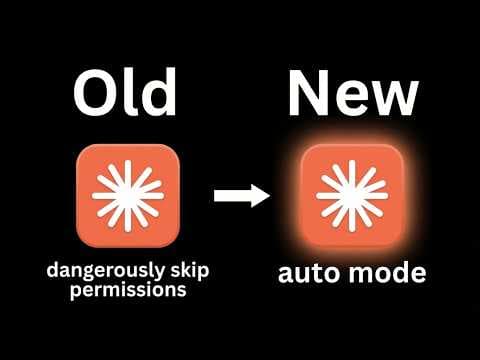
Cloud Code Auto Mode: Stop Bypass Permissions
Claude's Cloud Code has a new 'auto mode' that handles permissions on its own, and @nateherk's video 'STOP Using Bypass Permissions, Use This New Feature Instead' breaks down why it matters. Until now, developers were stuck choosing between constant approval prompts that killed their workflow or a full permission bypass that let the AI do basically anything unchecked — neither great. Auto mode sits in the middle, classifying each action for risk before running it, so safe stuff executes quietly and sketchy stuff gets flagged. It's in research preview and currently limited to Team plan subscribers.

Gemini 3.1 Flash Live: The Future of Voice Agents
Google's Gemini 3.1 Flash Live ditches the old speech-to-text-to-speech pipeline in favor of direct audio processing, and according to @nateherk's breakdown in 'Gemini 3.1 Flash Live Just Changed Voice Agents Forever,' the difference is noticeable. The model posts a 19% improvement in multi-step function calling over its predecessor, handles noisy real-world environments well, and is already free to test in Google AI Studio. There are rough edges — it goes silent mid-conversation while executing functions — but the overall package is a genuine step forward for anyone building voice agents.
Claude Code Memory 2.0: Anthropic's AutoDream Explained
Anthropic has shipped an experimental feature for Claude Code called AutoDream, a background memory consolidation system that periodically organizes and prunes Claude's context files to keep interactions sharp over time. @nateherk breaks it down in 'Claude Code Just Dropped Memory 2.0' — and it's genuinely one of the more interesting things to land in AI tooling recently. The short version: Claude now basically sleeps on your project, trims the fat from its memory files, and wakes up less confused about who you are and what you're building.