Gemini 3.1 Flash Live: Voice Agents' Future Revealed
Google's Gemini 3.1 Flash Live ditches the old speech-to-text-to-speech pipeline in favor of direct speech-to-speech processing, and it's apparently a bigger deal than it sounds. @nateherk breaks it all down in 'Gemini 3.1 Flash Live Just Changed Voice Agents Forever,' covering everything from a 19% benchmark jump over Gemini 2.5 Flash to the model's ability to read a room — literally — through its built-in visual perception. If you build voice agents, or just talk to AI more than you talk to people, this one's worth knowing about.

Direct Speech Processing, No Middleman
Previous voice AI worked like a game of telephone: speech gets transcribed to text, text gets processed, response gets converted back to audio.
Gemini 3.1 Flash skips the transcription step entirely, processing audio directly — which cuts latency and, more interestingly, lets the model pick up on things text never captures: sarcasm, frustration, stress, the whole emotional subtext of how someone is actually speaking.
It Can Also See
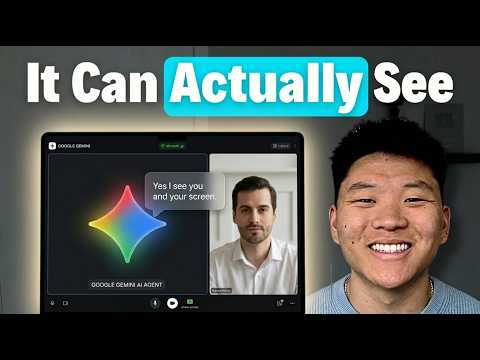
Alongside the audio overhaul, the model comes with multimodal visual input — meaning it can take in a camera feed and factor that into its responses.
In Gemini 3.1 Flash Live Just Changed Voice Agents Forever, @nateherk demos the model correctly identifying objects in a room and distinguishing microphone types on sight, which is either impressive or slightly unsettling depending on your disposition toward AI that knows what's in your home office.
Benchmark Gains and Real-World Noise
On multi-step function calling — the kind of chained task execution that makes or breaks a voice agent in production — Gemini 3.1 Flash posts a 19% improvement over Gemini 2.5 Flash.
It also holds up in noisy environments, like a street with traffic running in the background, filtering out ambient sound without losing the thread of a conversation. That's less a party trick and more a hard requirement for anything deployed outside a quiet server room.
Alphanumeric Accuracy
One quietly useful detail from @nateherk's breakdown: the model handles alphanumeric strings with high accuracy.
For voice agents doing anything with order numbers, license plates, serial codes, or account IDs, that's the kind of thing that determines whether a product actually ships or whether a customer ends up on hold for forty minutes.
Our Analysis: Nate gets it right — skipping the speech-to-text-to-speech pipeline isn't a minor tweak, it's the whole game. Latency was always the uncanny valley problem for voice agents, and cutting it here makes conversations feel less like talking to a phone tree.
This fits the broader push toward models that read context, not just content — understanding that a frustrated tone means something different than the words alone.
The multimodal angle is the sleeper feature. Voice plus vision in real-time is where enterprise use cases get genuinely weird and useful, fast.
It's worth zooming out on what the alphanumeric accuracy improvement actually signals. Most voice AI coverage focuses on fluency and naturalness — the stuff that's easy to demo. But the silent killer for voice agents in production has always been precision on structured data. A model that sounds great but mishears a confirmation code or garbles a license plate number isn't just annoying; it's a liability. The fact that this is getting called out as a solved-enough problem suggests Gemini 3.1 Flash is being designed with real deployment environments in mind, not just benchmark stages.
The noise robustness point deserves similar attention. Labs and demo videos are quiet. The real world isn't. Kitchens, call centers, warehouses, cars — every environment where voice agents would actually earn their keep is also an environment full of competing audio. A model that can't handle a busy street isn't ready for those contexts no matter how good its reasoning is. Treating ambient noise handling as table stakes rather than a bonus feature is the right framing, and it's telling that it's being demonstrated explicitly.
What's harder to assess from the outside is how all these gains compound. A 19% benchmark improvement on function calling is meaningful in isolation. But paired with lower latency, better emotional signal detection, and real-time visual context, you're potentially looking at a qualitatively different class of interaction — one where the agent isn't just completing tasks but adapting to the person doing the asking. That's a harder thing to quantify, and it's probably where the most interesting production results will show up over the next year.
Source: Based on a video by @nateherk — Watch original video
This article was generated by NoTime2Watch's AI pipeline. All content includes substantial original analysis.
Related Articles
Paperclip AI Tool: Turn Claude Code Into an Agent Company
A new open-source tool called Paperclip lets you run an entire AI-driven company from a single dashboard, with minimal human input required. Nate Herk of Nate Herk | AI Automation broke it down in his video 'This One Tool Turns Claude Code Into an Entire Agent Company,' showing how the platform orchestrates intelligent agents in AI roles — CEO, marketer, engineer — while the user just sets goals and watches the thing run. It's free, it's on GitHub, and it's gaining traction fast among people who'd rather manage a board meeting than a Slack channel.
Cloud Code Auto Mode: Stop Bypass Permissions
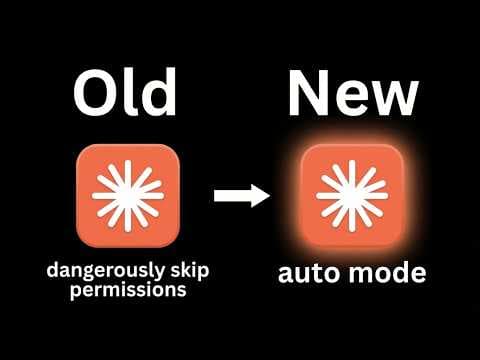
Claude's Cloud Code has a new 'auto mode' that handles permissions on its own, and @nateherk's video 'STOP Using Bypass Permissions, Use This New Feature Instead' breaks down why it matters. Until now, developers were stuck choosing between constant approval prompts that killed their workflow or a full permission bypass that let the AI do basically anything unchecked — neither great. Auto mode sits in the middle, classifying each action for risk before running it, so safe stuff executes quietly and sketchy stuff gets flagged. It's in research preview and currently limited to Team plan subscribers.
Gemini 3.1 Flash Live: The Future of Voice Agents
Google's Gemini 3.1 Flash Live ditches the old speech-to-text-to-speech pipeline in favor of direct audio processing, and according to @nateherk's breakdown in 'Gemini 3.1 Flash Live Just Changed Voice Agents Forever,' the difference is noticeable. The model posts a 19% improvement in multi-step function calling over its predecessor, handles noisy real-world environments well, and is already free to test in Google AI Studio. There are rough edges — it goes silent mid-conversation while executing functions — but the overall package is a genuine step forward for anyone building voice agents.